
Call This Thursday to get $50 Off
Do You Need a Plumber in Savannah
Call us Now to Get $50 OFF.
4.8/5
Ratings based on 1562 reviews
Local Plumbers, Local Reviews
Call This Thursday to get $50 Off
Call us Now to Get $50 OFF.
Ratings based on 1562 reviews
Local Plumbers, Local Reviews

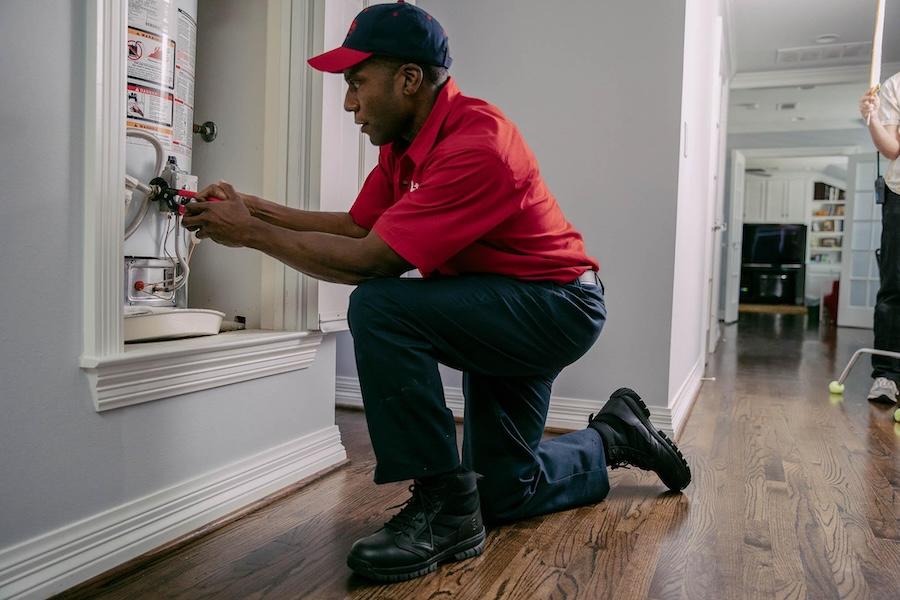
Choosing the right water heater size is more important than many homeowners realize. A unit that is too small may leave family members waiting for hot water, while an oversized system can waste energy and increase utility costs. For a family of four, the correct size depends on daily habits, the number of bathrooms, appliance use, and whether the home uses a traditional tank or tankless system.
Mr. Rooter Plumbing helps homeowners evaluate their hot water needs and determine whether repair, adjustment, or water heater replacement is the best solution.
For many households with four people, a traditional tank water heater between 50 and 60 gallons is usually a practical starting point. A 50-gallon unit may be enough for families with moderate hot water use, especially when showers, laundry, and dishwashing are spread throughout the day.
A 60-gallon tank may be more appropriate when several people shower close together, the home has multiple bathrooms, or hot water appliances are used frequently. Families with teenagers, large soaking tubs, or high-flow showerheads may also benefit from the extra capacity. However, tank size alone does not tell the whole story. The recovery rate and first-hour rating are just as important.
The first-hour rating shows how many gallons of hot water a tank-style unit can deliver during one hour of heavy use. It combines the amount of stored water with how quickly the system can heat incoming cold water.
For example, a 50-gallon water heater may have a first-hour rating higher than 50 gallons because it begins reheating water as soon as the tank is being used. A family of four should generally look for a first-hour rating that matches the amount of hot water used during the busiest hour of the day.
A plumber in Rincon, GA can estimate this demand by considering showers, dishwashing, laundry, and sink use. This approach is more accurate than choosing a unit based only on the number printed on the tank.
Gas and electric water heaters may provide different recovery rates. Gas models often reheat water faster, which can make a smaller tank perform well in a busy household. Electric units may recover more slowly, so a slightly larger tank could be needed to prevent shortages.
The home’s existing utility connections, installation space, energy costs, and venting requirements will also influence the decision. Before scheduling water heater replacement, a professional plumbing repair service can explain which system is most practical for the property.
Tankless systems are not sized by storage capacity. Instead, they are rated by flow rate, usually measured in gallons per minute. The correct size depends on how many fixtures may run at the same time and how much the incoming water temperature must be raised.
A family of four may need a tankless system capable of supplying roughly 7 to 10 gallons per minute, depending on the climate and simultaneous usage. For example, two showers and a dishwasher operating at once can create significant demand.
A trusted plumber should calculate the required flow rate and temperature rise before installation. An undersized tankless unit may struggle to maintain the desired temperature when multiple fixtures are used.
Running out of hot water regularly is the most obvious sign that a unit may be undersized. Other signs include having to schedule showers, waiting between appliance cycles, or noticing frequent temperature changes.
However, insufficient hot water does not always mean the tank is too small. Sediment buildup, damaged heating elements, thermostat problems, or an aging burner can reduce performance. A plumbing repair service can inspect the system and determine whether maintenance or repair could restore capacity.
If the unit is old, inefficient, leaking, or frequently breaking down, water heater replacement may provide better long-term value.
There is no single perfect water heater size for every family of four. A 50-gallon tank works well for many households, while others may need 60 gallons or a properly sized tankless system. The best choice depends on peak-hour demand, energy source, recovery rate, and family routines.
Mr. Rooter Plumbing can assess your current system, review your hot water habits, and recommend the right equipment for your home. With help from an experienced plumber, you can choose a water heater that delivers dependable comfort without paying for unnecessary capacity.
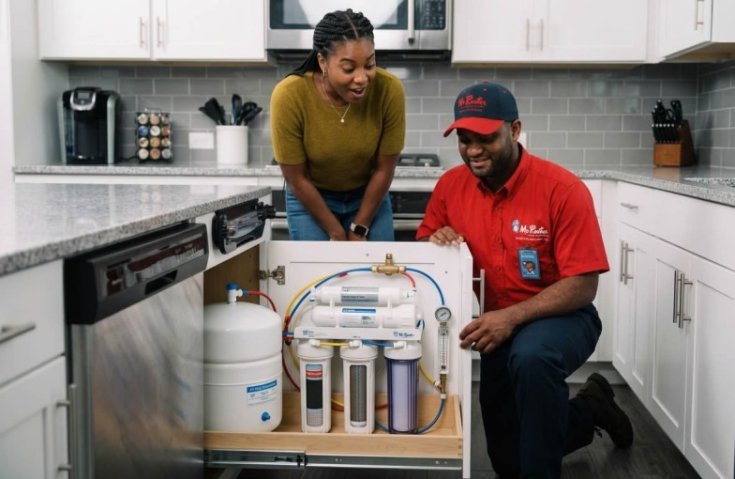
The water coming into your home may look perfectly clear, but that does not necessarily mean it is free from minerals,…
Read More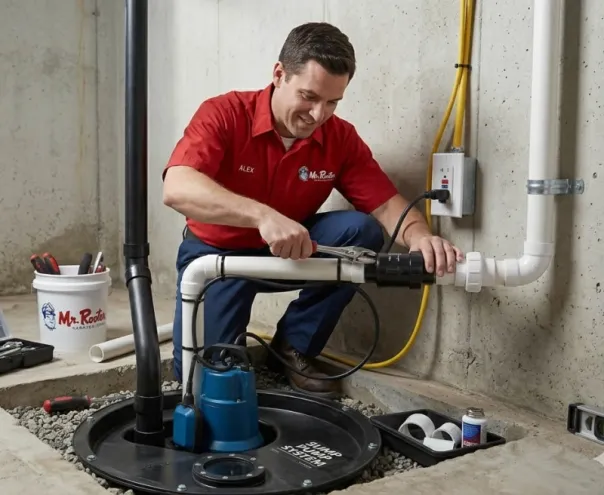
A sump pump plays an important role in protecting your home from water damage, especially if you have a basement or…
Read More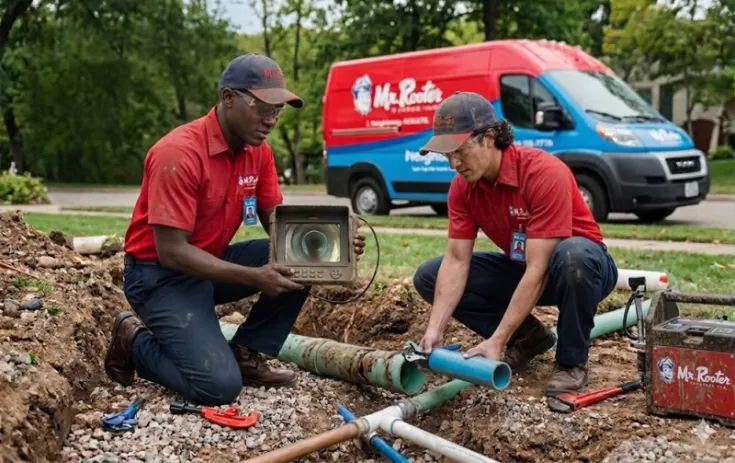
A leaking pipe or damaged plumbing line often catches homeowners off guard. In an effort to save money, many people opt…
Read More
Most homeowners don't think twice about a faucet that drips every few seconds. After all, it's just a little water, right?…
Read More